


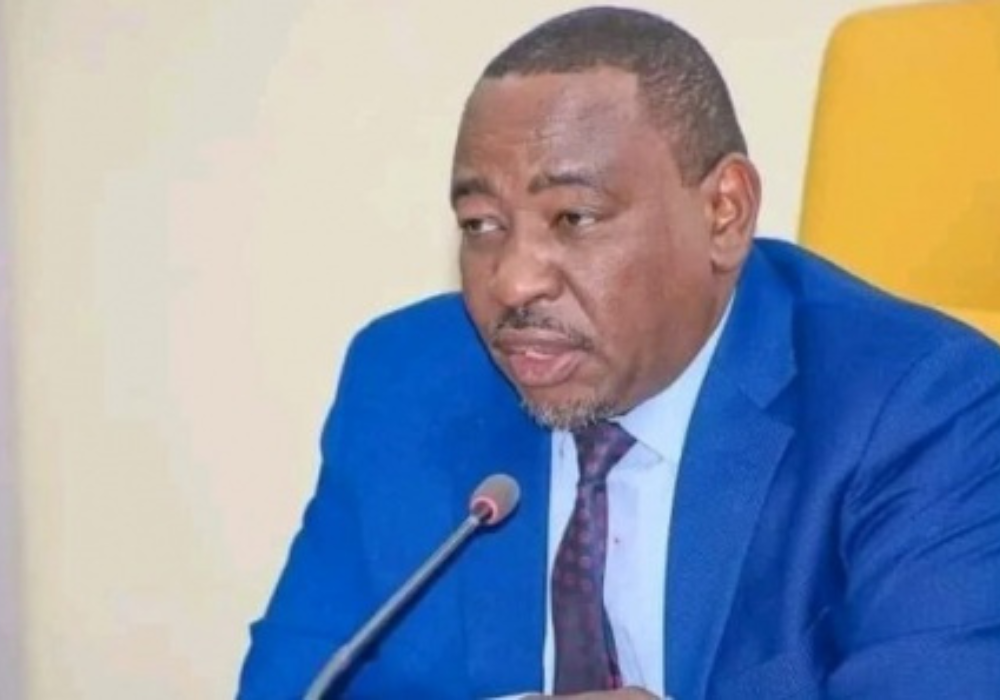
Chad: Journalist’s police custody extended, concerns about press freedom
Detention deemed arbitrary
Mbaindinguim Monodji Olivier, editor of the weekly Le Pays and correspondent for Radio France Internationale (RFI) in Chad, has remained in police custody since Wednesday. His detention, denounced as “arbitrary” by his lawyers, has been extended until Monday March 10, 2025.
The Union of Journalists of the Free African Press (UJPLA) has condemned an arrest carried out “in a surprising and total opacity” and “without any supporting legal document”, according to a press release issued on Friday.
Arrest without official justification
The journalist was arrested on Wednesday while on the premises of his newspaper. Police officers presented him with a warrant signed by the public prosecutor and seized his computer. However, no official reason was given, according to RFI.
Since he was taken into police custody, a hearing began on Friday, but was quickly suspended by his lawyers due to the presence of an unidentified individual alongside the police officers.
Strong reactions and calls for his release
The journalist’s arrest sparked a wave of indignation within the profession and civil society. The Patronat de la Presse Tchadienne (PPT) demanded his “immediate and unconditional release”, urging the prosecutor to “clarify the circumstances of this arrest”.
The UJPLA also called on the Chadian authorities to respect press freedom and guarantee the safety of journalists.
Growing repression of dissenting voices
In recent months, several journalists, political activists and members of civil society have been arrested in opaque conditions, sometimes amounting to kidnappings, according to human rights organizations.
Last August, Badour Badour Oumar Ali, editor-in-chief of Tchadinfos, was arrested by the intelligence services before being released under the pressure of a national and international mobilization. According to the Association des Médias en Ligne du Tchad (AMET), at least two other journalists have since been arbitrarily detained.
A locked political climate
Mahamat Idriss Déby Itno, who came to power at the head of a military junta after the death of his father in 2021, consolidated his authority by winning a disputed presidential election, deemed “neither credible nor free” by the opposition. His party went on to dominate legislative, senatorial and local elections, which were boycotted by the opposition.
The growing number of arrests of journalists and opponents is part of an increasingly repressive climate, in which any challenge to the ruling power seems to be systematically stifled.


