


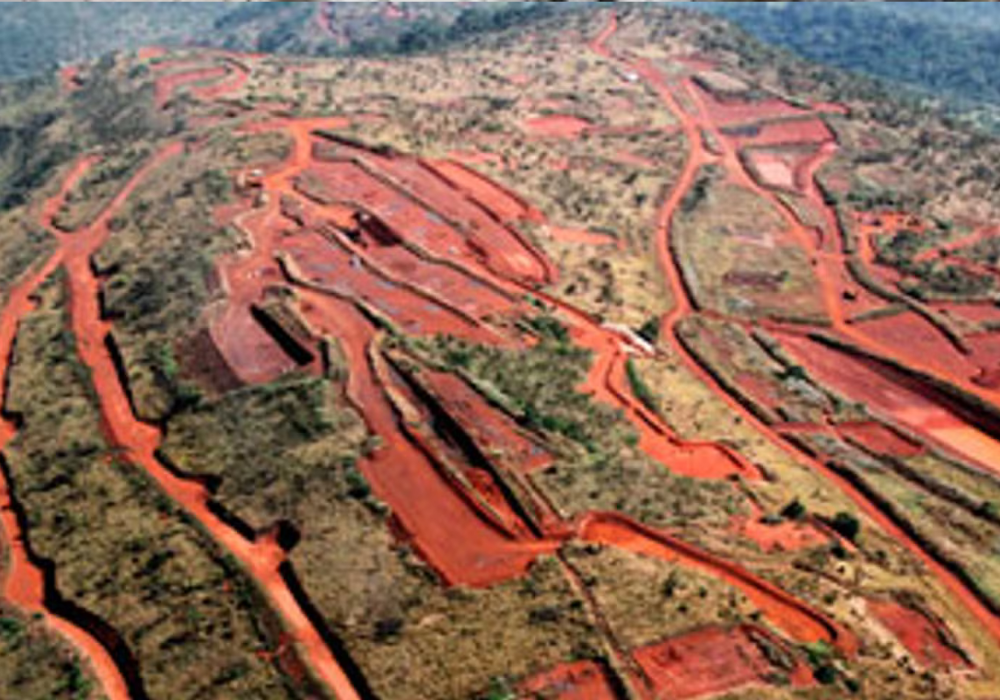
Simandou: from Sékou Touré to Mamadi Doumbouya, the turbulent destiny of a mythical iron deposit
A strategic project for Mamadi Doumbouya’s junta
Since the overthrow of Alpha Condé in 2021, the Simandou project has become a national priority for the Guinean junta. For General Mamadi Doumbouya, bringing this legendary deposit into production represents much more than an economic challenge: it’s a test of legitimacy. The aim? To make Simandou the driving force behind a new era of development in Guinea.
A decades-old dream
Known since the 1930s, the deposit was only really taken seriously after independence. As early as the 1970s, Sékou Touré set his sights on international cooperation for its exploitation. Agreements were signed with Japan to build a rail network. At the time, there was talk of a $1.2 billion project. But these ambitions remained unfulfilled for a long time.
The Rio Tinto years: hope, slowness and conflict
1997: Rio Tinto wins concessions
The Anglo-Australian group Rio Tinto entered the scene in 1997, obtaining permits for more than 1,460 km². Despite promising results, the company was slow to invest, citing the high cost of the railroad. In 2006, it secured a concession for four blocks, but the project stagnated.
BSGR affair: corruption and scandals
Thanks to this inertia, businessman Beny Steinmetz was awarded Blocks 3 and 4 in 2008, following suspicious payments to Mamadie Touré, wife of Lansana Conté. Sold back to Vale for $2.5 billion, the blocks became the focus of a corruption scandal. In 2014, Alpha Condé withdrew the rights from BSGR, triggering a lengthy international legal battle.
2019: Winning relaunches Simandou with China
The WCS consortium’s challenge
In 2019, the Winning Consortium Simandou (WCS), made up of Chinese companies (Winning Shipping, Shandong Weiqiao) and Lebanon’s Fadi Wazny, relaunched the project. In 2020, the first infrastructure work will begin. The aim is to link the deposit to a mineral port in Forecariah via 650 km of railroad.
2022: Mamadi Doumbouya imposes his vision
As soon as he arrived, Mamadi Doumbouya demanded a reorganization. He imposed an agreement between WCS and Rio Tinto, with the Guinean state participating in the infrastructure. Despite tensions and an interruption in work, a new agreement was reached in mid-2022. Momentum was restored.
Baowu Steel enters the dance and speeds up the process
Chinese giant secures financing
At the end of 2022, Baowu Steel, the world’s leading steel producer, joins the project. It becomes a reference shareholder via stakes in all the blocks. Its arrival unblocks Chinese bank financing and ensures a production timetable: end 2025.
But concerns remain
As exploitation approaches, grey areas remain. The agreements signed between the government and the companies involved have not been published. This lack of transparency is a source of concern for NGOs, the IMF and a section of Guinean public opinion.
Conclusion: Simandou, a historic turning point for Guinea
After more than 30 years of ups and downs, the Simandou iron ore deposit finally seems to be on the road to exploitation. For Guinea, this represents an unprecedented economic opportunity, which could generate revenues for decades to come. But success will depend on transparency, good governance and fair distribution of the benefits. After dreaming about Simandou for so long, Guineans are now expecting concrete results.


